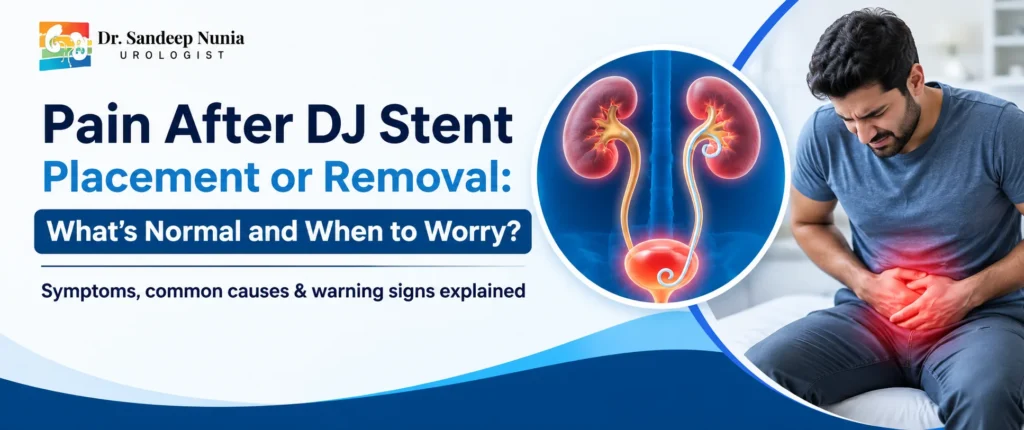
Pain After DJ Stent Placement or Removal: What’s Normal and When to Worry?
Is pain normal after DJ stent placement or removal? Mild to moderate discomfort is common with both, so a bit of stinging or a dull ache in the side usually isn’t a cause for alarm. Most people find that pain after DJ stent removal is short-lived and fades within a day or two, although it varies from person to person. Severe or worsening pain, fever, heavy bleeding or being unable to pass urine are critical symptoms and need a doctor promptly. This guide breaks down what’s normal and what comes up as matter of concern in detail.
What Is a DJ Stent and Why Is It Placed After Kidney Stone Surgery?
A DJ stent, also called a double J stent, is a thin, soft tube that runs inside the ureter and keeps urine moving from the kidney to the bladder. The name comes from the small curl at each end, which stops it from slipping out of position.
Surgeons usually place one after ureteroscopy or laser treatment for kidney stones, because the ureter can be swollen or sore afterwards and may not drain well on its own. A stent is also used when a stone is blocking urine flow. Ureteral stents are meant to be temporary, and your urologist decides when they come out.
Is Pain Normal After DJ Stent Placement?
Yes, some pain is normal while a stent is in place, and it’s usually mild to moderate. DJ stent pain after kidney stone surgery tends to flare when you walk around, exercise or pass urine, then settles when you rest. It shouldn’t keep building, and it shouldn’t arrive with fever or heavy bleeding.
Common Symptoms After Stent Placement
Most people get a mix of the symptoms below:
- Burning or stinging when passing urine
- A sudden, frequent urge to go
- Lower abdominal or pelvic discomfort
- Pink or light red urine
- A dull ache in the side or back
These symptoms can be irritating, but they should stay bearable.
Why Does the Kidney Hurt During Urination With a Stent?
A stent is an open tube, so when the bladder squeezes during urination, a little urine can be pushed back up towards the kidney. That’s what causes the pulling or aching feeling in your side, and it tends to come and go with each trip to the toilet. It’s a known effect of stents, but pain that is severe or constant should be reported to your urologist.
Does DJ Stent Removal Hurt?
For most people, removal is quick and feels like pressure or a sharp sting rather than severe pain. How much you feel depends on the method used and your own pain tolerance, and kidney stent removal pain is usually over within minutes.
How Is a DJ Stent Removed?
Many stents come out in a clinic. The doctor passes a thin, flexible camera through the urethra, usually after numbing gel, and gently pulls the stent out. In other cases, it’s removed under sedation or anaesthesia, sometimes during another procedure. Only a clinician should take a stent out, so never try to remove it yourself.
What Does Removal Feel Like?
You may feel pressure, a brief sting or a short cramp as the stent slides out. Many people also get a strong urge to pass urine during and just after. Mild soreness can hang around for a few hours, but severe pain isn’t expected and should be reported.
Why Does Pain Occur After DJ Stent Removal?
Mild pain after ureteral stent removal is usually temporary and linked to irritation of the ureter and bladder lining. Pain that is severe, worsening or comes with fever needs checking, because it can point to infection or a blocked ureter.
Temporary Ureteral Spasms and Irritation
Your ureter has had a tube running through it for days or weeks, so it can stay sore for a little while after the stent comes out. Cramps are common, and they tend to rise and fade in waves, low in the belly or in the side, a bit like period pain or a stomach cramp. Most people find that ureteral stent removal and possible cramping go hand in hand for a short time, and the cramps settle as the lining recovers.
Burning During Urination
The urethra and bladder lining have been rubbed by the stent and then by its removal, so a stinging feeling when you pee is not surprising. Burning urination after stent removal should ease a little each day. If it’s getting worse instead, or you notice a fever or cloudy, foul-smelling urine, ask for a urine test.
Kidney or Back Pain After Removal
Your kidney has to get used to draining on its own again, and some people feel a dull ache in the side or lower back while that happens. A mild kidney pain after stent removal that fades over a day or two is usually not a worry. Pain that is sharp, stays on one side or keeps growing is a reason to phone your urologist the same day.
Could It Be an Infection or a Blockage?
It could, and that’s why the pattern of your pain matters. With an infection, you would typically experience fever, shivering, and burning sensations that actually worsen over time. With a blocked ureter or retained stone fragment, there will be an obstruction in urine flow that results in sharp pain in the flank. Sometimes, kidney stone symptoms and those of stent pain may be similar. Remember that severe pain is not a part of the recovery process.
How Long Does Pain Last After DJ Stent Removal?
So, how long does pain last after stent removal? Usually a day or two. The soreness or stinging fades fairly quickly for most people, though a few still feel it after several days. Pain that is strong or building should be checked by a doctor.
| Symptom | What many people notice | When to ask for advice |
| Burning urination | Often eases over a few days | Getting worse, or with fever |
| Cramping or spasms | Short waves that fade within hours to a day or two | Severe or increasing |
| Pink urine | Light colour that usually clears within a day or two | Heavy bleeding or clots |
| Urgency and frequency | Gradually settles over a few days | Lasts longer than your team advised |
| Flank or back ache | Mild ache that slowly improves | Sharp, one-sided or worsening |
Your own recovery after ureteric stent removal may run faster or slower than this.
Normal Discomfort vs Warning Signs After Stent Removal
Mild, improving symptoms can be temporary, but fever, severe pain, heavy bleeding or being unable to pass urine need urgent care. Telling the two apart early means you can relax about the small twinges and still act fast when it counts.
| May be temporary | Seek care urgently |
| Mild burning that improves each day | Fever or chills |
| Brief cramps that settle | Severe or worsening flank pain |
| Light pink urine | Inability to pass urine |
| Needing to pass urine more often | Heavy bleeding or blood clots |
| A mild, fading ache in the side | Marked illness or vomiting |
If anything in the right-hand column appears, call your urologist or go to an emergency department straight away. Don’t wait to see if it passes, and don’t assume it’s just part of recovery.
How Can Patients Manage Discomfort After DJ Stent Removal?
Most people manage well by following their discharge instructions and watching how symptoms change from day to day. Your urologist may suggest the steps below.
- Use only the pain relief your doctor has recommended, and take it the way they’ve told you to.
- Drink fluids as advised for your situation, since some patients are given specific targets.
- Rest when you need to, and get back to normal activity gradually, following your doctor’s instructions.
- Keep a short note of whether symptoms are improving, staying the same or getting worse.
Don’t start antibiotics or extra medicines on your own. If symptoms are getting worse rather than better, call your care team.
When Should You Contact a Urologist After Stent Removal?
Contact your urologist doctor if pain lasts longer than expected, increases or changes, or if you notice signs of infection, changes in urination or reduced urine flow. Keep your follow-up appointments too, because they let your doctor check that the kidney is draining well. Assessment may include a urine test or imaging, depending on your symptoms. Go to emergency care for fever with chills, inability to urinate, heavy bleeding or clots, vomiting, or severe pain that keeps worsening.
Frequently Asked Questions
Is DJ stent removal more painful than insertion?
For most people, removal is shorter and less uncomfortable than living with the stent. Insertion usually happens under anaesthesia, so the comparison depends on the removal method and your own pain tolerance.
Why does my kidney hurt when I urinate with a DJ stent?
Urine can flow back towards the kidney when the bladder squeezes, which causes an ache in the side. Tell your urologist if the pain is severe or constant.
Is severe pain normal a few hours after removal?
No, severe pain isn’t expected and shouldn’t be put down to normal recovery. Contact your urologist or seek urgent care, especially if you have fever, vomiting or difficulty passing urine.
How long can burning urination last after stent removal?
Burning often settles within a few days. It differs from person to person. Get it checked if it gets worse. Do the same if it lasts longer than your care team said it would, or if a fever starts.
Is blood in urine normal after DJ stent removal?
A light pink tint can show up briefly after removal. Slightly red urine is possible too. Heavy bleeding is not normal. Neither are clots or trouble passing urine. Those need urgent medical attention.
Can remaining stone fragments cause pain after stent removal?
Yes, they can. Tiny fragments sometimes travel down the ureter. That can cause cramps, pain in the side and blood in the urine. If the pain lasts or keeps growing, get it assessed. Your doctor may suggest a urine test or imaging.
Can I return to work the day after DJ stent removal?
Some people do. Desk jobs are usually easier to go back to. It still depends on your procedure and how you feel. Your surgeon’s advice comes first. Check with your urologist before you go back, especially if your work is physical.

DR. SANDEEP NUNIA
urology, urogynaecology, renal transplant, and advanced laparoscopy
Dr. Sandeep Nunia is one of the best urologists in Jaipur, Rajasthan, having experience of several years in urology, urogynaecology, renal transplant, and advanced laparoscopy. He is currently working in Manav Hospital , VKIA, Jaipur, and Pacific Diagnostic center, Vaishali Nagar, Jaipur, as Head Urology Consultant.
Know More →