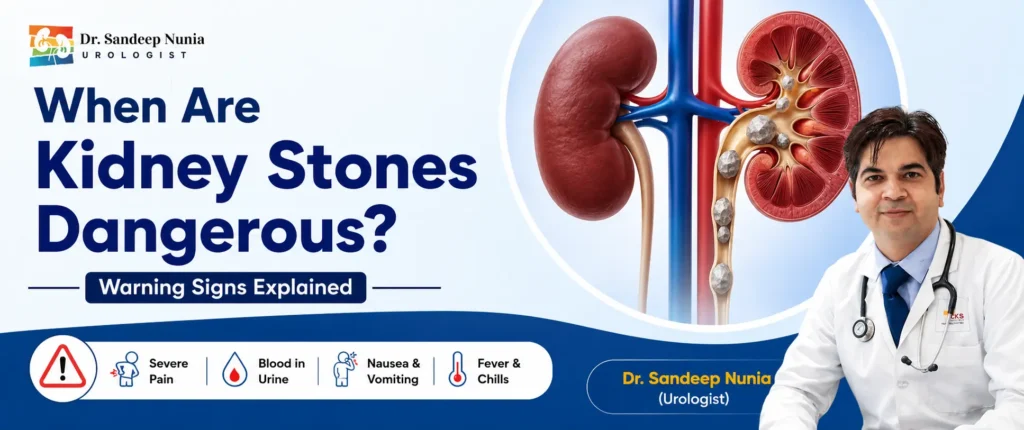
When Are Kidney Stones Dangerous? Warning Signs Explained
Kidney stones are fairly common, but for the vast majority of patients, they do not pose any immediate threat. On the other hand, there are instances in which kidney stones can become extremely serious, potentially even fatal. But how does one differentiate between the two? There are three primary indicators used by doctors to determine the level of risk posed by a kidney stone: size of the stone, its location in the urinary tract, and symptoms such as fever or decreased urine output. This article will take a look at the situation when kidney stones are not dangerous, the cases when they pose serious health risks, symptoms that can signal potential problems, and the way medical professionals approach them. Those curious about how life-threatening kidney stones can be and whether they are serious or not will find useful information in this guide on kidney stone risk explained simply.
What Are Kidney Stones?
Kidney stones refer to mineral deposits that accumulate inside the kidney. They are hard crystalline masses that form in the urinary tract when mineral salts in the urine stick together rather than being dissolved in the urine. In summary, they are “stone-like” masses that originate in the kidneys, migrate through the ureter, and reach the bladder and urethra. The migration of these stones leads to severe pain. Therefore, it is important to understand the causes of kidney stones to appreciate why hydration and dietary intake are critical.
The following are the four types of kidney stones according to physicians Calcium oxalate kidney stones (most common type), uric acid kidney stones, infection-related kidney stones (struvite stones), and genetically-linked kidney stones (cystine stones). A calcium oxalate kidney stone is the most prevalent among all kidney stones in the world today. Approximately 1 out of 10 individuals experiences kidney stones during their lifetime. Additionally, India records more than one hundred thousand cases of kidney stones annually.
Symptoms of Kidney Stones
The typical kidney stones symptoms are acute and may vary from slight discomfort to extreme pain. Renal colic is a typical symptom for kidney stones; the pain usually manifests itself on one side of the waist and moves towards the abdomen and groin region. The patients usually refer to the pain as “the worst pain they have ever felt” since it tends to come and go and become worse over time. So, if you have been asking yourself what does a kidney stone feel like, patients usually compare the pain to cramps, stabbing, and pressure making it hard for them to remain still.
Blood in urine is another typical warning sign of kidney stones. The patient’s urine will be colored red, pink, or brown since the kidney stone tends to irritate the urethra as it passes through it. In addition, other symptoms include an urge to pass urine, frequent urination, and burning during urination.
Nausea and vomiting can also occur, particularly when the pain worsens. Other signs of kidney stones that patients may experience include turbid or foul-smelling urine and difficulty urinating. Although smaller stones are likely to cause minimal pain, larger ones often elicit significant symptoms that call for medical attention.
When Kidney Stones Become Dangerous
Although many stones can pass without intervention, there are instances where conditions can rapidly worsen. Knowing the complications of kidney stones is essential since failing to treat high-risk cases can result in permanent damage to the kidneys or life-threatening infections. The first complication involves a situation wherein the stone blocks urine from flowing through the urinary tract. As a result, urine builds up in the kidney and causes swelling, known medically as hydronephrosis. Eventually, increased pressure inside the kidney reduces its efficiency.
In addition, an infection caused by bacteria is more likely to occur in cases where the stone obstructs the passage of urine. Once the bacteria become trapped, they can infect the body through the bloodstream, resulting in a severe condition known as urosepsis. In such a case, prompt medical attention is necessary to prevent fatal consequences.
Recurrent kidney stones or an unmanaged condition may increase the chances of developing chronic kidney disease. There is evidence to suggest that recurrent kidney stones increase the risk of long-term kidney damage. In extreme cases, where both kidneys are involved or there is an untreated obstruction, kidney stones may lead to kidney failure.
There are some populations who have additional risks associated with kidney stones. Pregnant women with kidney stones are at greater risk for infection, dehydration, and premature labor. Elderly patients are also at increased risk for complications due to infections that progress more quickly and have subtle presentations.
Understanding when kidney stones are considered life-threatening will enable individuals to receive prompt treatment and avoid irreversible complications.
Warning Signs: When to Go to the ER Immediately
Not all kidney stones need to be medically managed, however, some kidney stone ER warning signs should be recognized and prompt medical attention sought. The most important sign indicating that the presence of kidney stones requires emergency treatment is fever and shivers along with kidney stone pain. This could indicate a serious infection that has been trapped by the blockage and could quickly turn fatal. If you are experiencing fever along with kidney stone pain, go to the hospital immediately.
Another indicator of an emergency situation involving kidney stones is being unable to urinate since it indicates that the kidney stones have caused a full blockage of the urinary system. Severe and unmanageable pain that persists despite having taken medication also indicates that a trip to the hospital is necessary.
Vomiting can also be considered a danger signal since you will not be able to consume liquids or medications if vomiting persists. Dehydration is one of the consequences, which poses an additional threat to health. Knowledge of when to head to the hospital with kidney stones is essential since it will help avoid serious complications of this condition.
Diagnosis – How Doctors Evaluate Kidney Stones
Correct diagnosis of kidney stones is critical as it will allow doctors to prescribe proper treatment that will depend on stone size, location, and any possible complications. If a patient presents with severe pain in their sides or blood in their urine, doctors normally start with imaging studies and lab testing. The gold standard for the diagnostics of kidney stones is CT scan, as it is sensitive enough to detect very small stones and determine any blockage or swelling of the kidneys.
Another diagnostic modality that is often used is ultrasound scanning, which can be especially useful in cases involving large stones. Furthermore, due to lack of exposure to radiation, this technique is more popular among pregnant women.
In order to answer the question of how do doctors diagnose kidney stones, urine and blood tests are crucial components. This is due to the fact that they provide information about the patient’s kidney health, potential infection presence, and levels of substances responsible for kidney stones development, including calcium, uric acid, and oxalate. Patients may be advised to filter the stone from their urine in case it passed. In conclusion, the diagnosis of kidney stones plays an important role in urology.
Treatment Options – From Watchful Waiting to Surgery
The way of treating the stones is determined by the size of the stones, their location, symptoms, and other factors including any complications such as infections and blockage. Small kidney stones are usually treated without the surgery. Provided the patient stays hydrated, takes prescribed drugs for reducing pain, and consumes some muscle relaxers, the stones will dissolve naturally in about 3-6 weeks. Often, patients wonder how to pass a kidney stone quickly. To make a stone pass quickly, the patient should consume sufficient amount of fluids and exercise.
Large kidney stones and those causing too much pain may be treated using shock wave lithotripsy (ESWL). This method is minimally invasive and involves breaking down the stones into small pieces that will be eliminated from the body through urination.
One of the best techniques is ureteroscopy used for the elimination of kidney stones. During ureteroscopy, a urologist will use a thin tube to insert a laser and break the stones into small pieces.
A percutaneous nephrolithotomy (PCNL) is done in case of large or complicated stones. The procedure includes removing the stones through an incision made in the patient’s back.
Recent advancements in newer FDA-approved non-invasive lithotripsy systems are also improving treatment precision and reducing recovery time. Understanding these kidney stone treatment options explained by urologists helps patients feel more confident about choosing the right approach for their condition.
How to Stop Kidney Stones From Coming Back
The latest advances in FDA-approved modern non-invasive lithotripsy systems are making treatment more accurate while decreasing recovery time. Learning these methods for dealing with kidney stones according to urologists will make patients more confident in making the right choice for their health problems.
Alongside getting rid of kidney stones, it is crucial to prevent their reappearance in the future. Indeed, almost three quarters of those who get one kidney stone can have another in the course of their life, which means that developing a prevention strategy should be individual. One of the best approaches for this purpose is simply drinking more water since it decreases the risk of stone formation through urine dilution. According to urologists, daily intake of liquid needs to provide clear or pale-yellow urine.
Diet is another major factor in how to prevent kidney stones. Decreasing the intake of sodium, eliminating excesses of red meats, and reducing the consumption of oxalates (nuts, spinach, and chocolate) can reduce the risk of having another kidney stone among those who are prone to developing them. At the same time, a proper diet consisting of fruits, vegetables, and calcium-rich food can be helpful. Many patients find it shocking to realize that intake of calcium, through proper diet, can be helpful for them.
There are some drugs which can be taken if the stones are made up of certain material. Potassium Citrate, Thiazide Diuretics, and Allopurinol are some examples of such drugs. Learning about the appropriate diet which prevents kidney stones along with knowing about kidney stones foods to avoid will prevent kidney stones from developing again in the future. You should consult an expert Urologist who can formulate a plan based on your stones’ composition, diet, and metabolism.
When to See a Urologist
You would need to visit a urologist for kidney stones if you suffer from recurring kidney stones, severe pain, a fever, problems urinating, or large-sized stones that cannot be passed through normally. Seeking early treatment avoids any serious conditions such as infections, kidney injuries, or even obstruction of the urinary tract. When you are asking yourself about when to consult a doctor regarding your kidney stones, you should seek consultation if the symptoms persist for several days.
Consult Dr. Sandeep Nunia now for a reliable assessment and advanced solutions for kidney stones. At Manav Hospital Jaipur clinic, he offers his services as a leading kidney stone specialist in Jaipur.
FAQ
Q: Can kidney stones go away on their own?
Yes. Kidney stones may dissolve by themselves if they are small enough in size. Under the influence of hydration and analgesics, these stones are excreted within a couple of weeks.
Q: Can kidney stones cause permanent kidney damage?
Yes, because they may become chronic or may lead to blockage which will affect the kidney’s functionality. The infections caused by the kidney stones may as well be severe, leading to damage of the kidney. Therefore, early treatment is always advised when answering whether kidney stones can cause permanent damage.
Q: How long can you wait to pass a kidney stone?
In most cases, doctors advise people not to monitor the kidney stone for more than 4–6 weeks before seeking treatment especially if it doesn’t affect them and their kidney function. People usually ask how long does it take to pass a kidney stone, however, the response varies depending on the size of the stone.
Q: Is kidney stone pain the worst pain ever?
Yes, most people experience this pain as being extremely excruciating.
Q: Can you get kidney stones more than once?
Unluckily, yes. About 75% of people with kidney stones are likely to develop other stones without proper prevention.

DR. SANDEEP NUNIA
urology, urogynaecology, renal transplant, and advanced laparoscopy
Dr. Sandeep Nunia is one of the best urologists in Jaipur, Rajasthan, having experience of several years in urology, urogynaecology, renal transplant, and advanced laparoscopy. He is currently working in Manav Hospital , VKIA, Jaipur, and Pacific Diagnostic center, Vaishali Nagar, Jaipur, as Head Urology Consultant.
Know More →