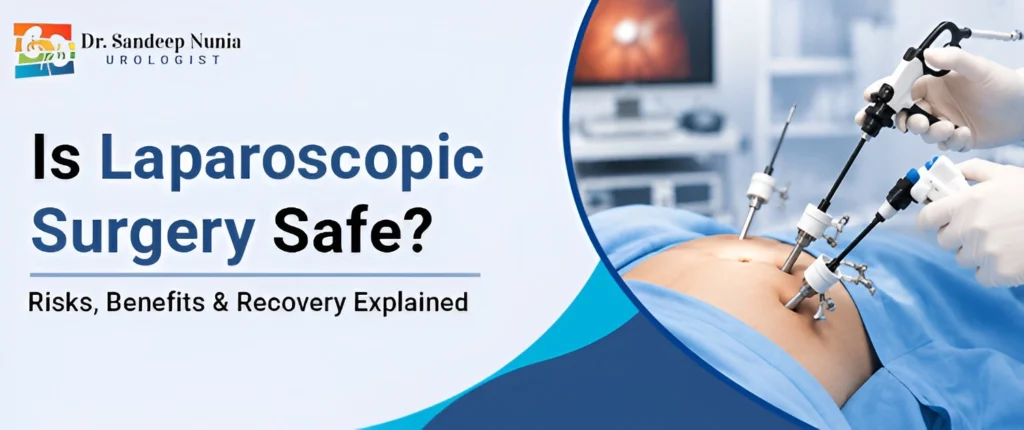
Is Laparoscopic Surgery Safe? Risks, Benefits & Recovery Explained
Patients scheduled for surgery almost always ask the same thing first. Is laparoscopic surgery safe? It usually is, for most people, when the surgeon has the required expertise, and the hospital has a proper setup. However, this must not be presumed as a complete guarantee.
Laparoscopic surgery uses small cuts instead of one big incision. Less cutting generally means less pain and a faster recovery. But risk doesn’t disappear just because the wound is smaller. Some patients heal in days; others take longer, depending on age, existing health issues, and how complex the procedure actually is. This guide walks through what laparoscopy involves, its real benefits, its risks, who shouldn’t rush into it, and what recovery actually looks like day to day. It also touches on cost and how to pick a laparoscopic surgeon in Jaipur without second-guessing yourself later.
How Safe is Laparoscopic Surgery?
Nearly every patient who walks into a consultation room with a surgery recommendation wants a straight answer before anything else. It is understandable as nobody agrees to a procedure without wanting to know what they’re walking into. Is laparoscopy safe when compared to older, open techniques? Mostly, yes.
Decades of use show fewer wound infections, less blood loss, and shorter hospital stays with laparoscopy. But how safe is laparoscopic surgery in your specific case comes down to three things, really: the condition itself, your general health, and the expertise of your surgeon.
What Makes Laparoscopic Surgery Safe?
A small camera and thin instruments go in through tiny cuts. The surgeon gets a magnified, well-lit view of what’s happening inside without opening the body wide. Less disturbance to tissue usually translates into quicker healing and less blood loss. Anesthesia monitoring today is also far more advanced than it was even fifteen years ago, and that adds a real layer of safety most patients don’t think about.
Is Laparoscopic Surgery 100% Risk-Free?
No, and any surgeon who claims otherwise isn’t being honest with you. Complication rates are low, not zero. Bleeding, infection, or a poor reaction to anesthesia can still happen, rarely, but it can happen. A good surgeon lays this out plainly before you sign anything, rather than sugar-coating it.
Key Safety Factors: Surgeon Experience, Hospital Setup, Anesthesia Fitness and Patient Health
A few things decide how safely the process is done:
- The surgeon’s hands-on experience with laparoscopic and urological cases
- Whether the hospital actually has proper laparoscopic equipment and ICU backup
- How fit you are for anesthesia, based on pre-surgery tests
- Other conditions you’re carrying, like diabetes or a heart issue
Get these four right, and the odds of a smooth procedure go up considerably.
What Is Laparoscopic Surgery?
Laparoscopic surgery refers to surgery done through small cuts instead of one long one. People call it keyhole surgery or minimally invasive surgery for a reason, since the openings really are that small.
The laparoscopy procedure depends on a thin camera-fitted tube, the laparoscope, guiding everything the surgeon does.
Why Is It Also Called Keyhole Surgery?
Because the cuts, usually half a centimeter to about one and a half centimeters, resemble keyholes. Instead of a single long incision, surgeons work through two to four small openings. A camera goes through one, and instruments go through the other.
How Is Laparoscopic Surgery Performed?
The abdomen gets slightly inflated with carbon dioxide gas first, creating room to work inside. The laparoscope goes in, sending live footage to a screen. Other tools follow through the remaining cuts to do the actual cutting, stitching, or removal. Once done, the gas is let out, and the small openings are closed, usually with a few stitches or surgical tape.
Common Urology Conditions Where Laparoscopy May Be Used
The common conditions are:
- Kidney tumours
- Kidney removal
- Blockages in the ureter
- Certain prostate conditions
- Some pelvic disorders in women
Laparoscopy shows up across urology far more than most patients expect, and pediatric cases benefit from it too, where smaller cuts matter for a child’s healing.
Benefits of Laparoscopic Surgery
Why do doctors prefer laparoscopy whenever it’s an option? It is because comfort plays a part. So does how fast someone gets back on their feet.
Laparoscopic surgery benefits show up consistently across specialties, urology included. Faster recovery after laparoscopic surgery is probably the advantage patients appreciate most, especially working professionals who can’t afford weeks off, or elderly patients who just want their routine back.
Smaller Incisions and Less Pain
Smaller cuts mean less tissue gets disturbed. Pain levels drop noticeably as a result, and most patients need far fewer painkillers than they’d expect going in.
Faster Recovery and Shorter Hospital Stay
Most people go home within one to three days, and that’s one of the main benefits of laparoscopy. Open surgery, by comparison, often keeps patients in for five to seven days. Shorter stays also mean less exposure to hospital-acquired infections, which is worth something on its own.
Smaller Scars and Lower Wound Infection Risk
Smaller cuts mean smaller scars. What’s less obvious is how much the infection risk drops, too, simply because there’s less exposed tissue throughout the whole process.
Possible Risks and Side Effects of Laparoscopic Surgery
Every benefit needs a counterweight, and patients deserve the full picture before deciding anything. Laparoscopic surgery risks stay lower than open surgery on average, but they don’t vanish.
Common Temporary Side Effects After Laparoscopy
Shoulder pain, bloating and nausea show up in most patients for a day or two, caused mainly by the gas used during surgery. They clear up on their own without needing treatment.
Rare but Serious Complications
Laparoscopic surgery side effects range from mild discomfort to, occasionally, more serious laparoscopic surgery complications requiring urgent care. Internal bleeding, organ injury, or infection can occur, though rarely. When they do show up, they need immediate medical attention, not a wait-and-watch approach.
Can Laparoscopic Surgery Become Open Surgery?
Sometimes, yes. If heavy bleeding starts or old scar tissue from a previous surgery gets in the way, the surgeon may switch to open surgery mid-procedure. That’s not a failure; it’s a safety call made in real time.
Who May Not Be Suitable for Laparoscopic Surgery?
Not everyone falls neatly into the laparoscopic category, and it helps to know that upfront rather than assuming it applies to every case.
Who should avoid laparoscopic surgery is a question worth asking early. When is laparoscopic surgery not safe it usually comes down to patient selection for laparoscopy, something doctors assess carefully before recommending anything.
Is Laparoscopic Surgery Safe for Elderly Patients?
Age by itself doesn’t disqualify anyone. Plenty of elderly patients go through laparoscopy without issue, as long as their heart and lungs can tolerate anesthesia and the gas used during the procedure.
Is It Safe for Diabetic, Obese or Heart Patients?
Usually, yes, though recovery might stretch out a bit longer for diabetic or obese patients. Heart patients need more careful anesthesia planning, and surgeons typically coordinate directly with a cardiologist before proceeding.
Is It Safe After Previous Abdominal Surgery?
Old surgeries sometimes leave scar tissue, called adhesions, that complicate laparoscopic access. Surgeons check for this through imaging and medical history before deciding the best way forward.
When Open Surgery May Be Safer Than Laparoscopy
Very large tumors, severe infections, and extensive scarring are situations where open surgery often gives the surgeon better visibility and control. That matters more than minimizing incision size.
Laparoscopic Surgery vs Open Surgery: Which Is Safer?
This comparison comes up in almost every consultation, and seeing the two side by side usually clears up the confusion faster than any explanation.
Laparoscopic surgery vs open surgery isn’t always a simple choice between two options. Is laparoscopy safer than open surgery for routine cases? Generally, yes, though open surgery vs laparoscopic surgery outcomes shift depending on exactly what’s being treated.
| Factor | Laparoscopic Surgery | Open Surgery |
| Incision size | Small (0.5-1.5 cm) | Large (several cm) |
| Pain level | Lower | Higher |
| Hospital stay | 1-3 days | 5-7 days |
| Recovery time | 2-4 weeks | 4-8 weeks |
| Scarring | Minimal | More visible |
| Infection risk | Lower | Higher |
| Best-suited cases | Most routine urological procedures | Complex, large or emergency cases |
| Limitations | Needs specialized equipment and training | More invasive, but it gives direct access |
When Laparoscopy May Be Preferred
It is opted for in the following cases:
- Routine kidney procedures
- Gallbladder removal
- Certain cancer surgeries
- Most elective urological operations, where the anatomy cooperates
When Open Surgery May Be Recommended
It is preferred for very large tumors, trauma cases, or situations where a patient’s anatomy makes laparoscopic access too risky to attempt safely.
Is Laparoscopic Surgery Safe for Common Urology Procedures?
Urology has changed more than most fields because of laparoscopy. Procedures that once meant large incisions now often need only a few small ones.
Laparoscopic urology surgery spans a wide range, from kidney issues to complex cancer treatment. Laparoscopic kidney surgery and laparoscopic nephrectomy are counted among the most common laparoscopic uro oncology surgery types performed today.
Laparoscopic Kidney Surgery
Used for kidney tumors, cysts, or partial and complete kidney removal. It gives precise visualization while sparing surrounding tissue from unnecessary damage.
Laparoscopic Uro-Oncology Surgery
Certain kidney and prostate cancers are increasingly treated this way. This allows careful tumor removal with less blood loss than traditional methods.
Laparoscopic Surgery in Pediatric Urology
Children born with urinary tract issues sometimes benefit from laparoscopic correction. Smaller cuts mean less scarring. This is why healing tends to happen faster in younger patients.
Female Urology and Pelvic Conditions
Some pelvic floor disorders and urogynaecological conditions in women respond well to laparoscopic treatment, with better cosmetic results and quicker recovery.
Kidney Stone Treatment and Other Minimally Invasive Urology Options
Not every kidney stone case needs laparoscopy. Many get treated through other minimally invasive routes. More on this is available under kidney stone treatment and laser treatment for kidney stones.
Recovery Time After Laparoscopic Surgery
Recovery isn’t identical across procedures, and having a rough timeline helps patients plan work and daily life better than vague reassurances do.
Laparoscopic surgery recovery time is shorter than open surgery on the whole, though it varies with procedure complexity. How many days rest after laparoscopic surgery is one of the most common questions asked, and recovery after laparoscopy tends to follow a fairly predictable pattern.
| Time Period | What to Expect |
| Same day/24 hours | Rest, light movement, pain managed with medication |
| 2-3 days | Discharge for most routine procedures |
| 1 week | Light household activity, no heavy lifting |
| 2-4 weeks | Gradual return to desk-based work |
| 4-6 weeks | Full recovery for physically demanding procedures |
How Many Days Rest Is Needed After Laparoscopic Surgery?
Roughly one to two weeks for most patients, though complex urological procedures sometimes need a bit longer before things feel fully normal again.
When Can You Walk, Drive and Return to Work?
Walking within 24 hours is usually encouraged, mainly to prevent blood clots. Driving generally becomes safe after a week, once pain settles and reflexes feel sharp again. Office work often resumes within two weeks, depending on how physically demanding the job is.
Diet After Laparoscopic Surgery
Keep it light and easy to digest for the first few days. Oily, spicy, or heavy foods should be avoided. A normal diet can return gradually, based on how the body responds.
What Not to Do After Laparoscopic Surgery
Skip heavy lifting, strenuous workouts, and long travel for at least two weeks. Ignoring follow-up visits or skipping prescribed medication also slows things down more than patients realize.
Warning Signs After Laparoscopic Surgery
Recognizing trouble early matters just as much as the surgery itself, sometimes more. Warning signs after laparoscopic surgery shouldn’t be brushed off. Fever after laparoscopy, unexplained bleeding after laparoscopic surgery, sharp abdominal pain, or ongoing vomiting all call for immediate medical attention. Related reading on when kidney stones become dangerous offers useful additional context for kidney patients specifically.
Laparoscopic Surgery Cost in India
Laparoscopic surgery cost in India varies depending on the procedure, the hospital, and the city. Laparoscopy cost in India is generally higher than open surgery pricing, mostly because of the specialized equipment involved. The exact cost of laparoscopic surgery depends on hospital stay length, anesthesia type, and how complex the procedure turns out to be, so it’s worth asking for a detailed estimate during consultation rather than guessing.
How to Choose a Safe Laparoscopic Surgeon
The surgeon matters as much as the technique, arguably more. A skilled surgeon lowers risk in ways no amount of good equipment can compensate for.
Finding the best laparoscopic surgeon takes a bit of research. Knowing how to choose laparoscopic surgeon options, particularly a laparoscopic surgeon in Jaipur, makes the whole process considerably less stressful.
Questions to Ask Before Laparoscopic Surgery
- How many laparoscopic procedures has this surgeon actually performed?
- What does the hospital’s laparoscopic setup actually look like?
- What specific risks apply to my case, not just generally?
- What’s a realistic recovery timeline for someone like me?
What to Check in Hospital Facilities
Dedicated laparoscopic equipment, trained support staff, and ICU backup, in case something unexpected comes up mid-procedure, are the basics.
Why Choose Dr. Sandeep Nunia for Laparoscopic Surgery in Jaipur?
Dr. Sandeep Nunia has built a reputation as the best urologist in Jaipur over years of hands-on surgical work.
- He has performed more than 15,000 major urological procedures, including over 1,500 laparoscopic nephrectomy cases and more than 5,000 successful laparoscopic surgeries completed within a relatively short span of practice.
- As the only urogynaecologist in Rajasthan, he has also carried out 300 advanced urogynaecological procedures, along with 100 pediatric urology cases such as MINI PCNL.
- His range covers kidney conditions, uro-oncology, female urology, and pediatric urology. This makes him a dependable option for anyone considering laparoscopic surgery in Jaipur.
FAQs
Is laparoscopic surgery safe?
For most patients, yes, when an experienced surgeon handles it, though individual risk still depends on health condition and procedure type.
What are the risks of laparoscopic surgery?
Infection, bleeding, anesthesia reactions, and occasional organ injury. Serious complications remain rare overall.
Should I worry about laparoscopic surgery?
A bit of nervousness is normal. With proper evaluation and an experienced surgeon, most patients get through it without major issues.
Is laparoscopy a risky surgery?
Less risky than open surgery in most comparisons, though not entirely without risk.
What is the survival rate for laparoscopic surgery?
Generally high for routine procedures, though outcomes shift based on the underlying condition, particularly with cancer-related surgeries.
Is laparoscopy safer than open surgery?
For most routine cases, yes, thanks to smaller incisions, lower infection risk, and faster recovery.
Is laparoscopic surgery painful?
Some discomfort is expected, but pain stays lower than with open surgery and is usually manageable with medication.
Is laparoscopic surgery a major surgery?
It can be minor or major depending on what’s being treated, regardless of how small the incisions look on the outside.

DR. SANDEEP NUNIA
urology, urogynaecology, renal transplant, and advanced laparoscopy
Dr. Sandeep Nunia is one of the best urologists in Jaipur, Rajasthan, having experience of several years in urology, urogynaecology, renal transplant, and advanced laparoscopy. He is currently working in Manav Hospital , VKIA, Jaipur, and Pacific Diagnostic center, Vaishali Nagar, Jaipur, as Head Urology Consultant.
Know More →